
Artwork for Hotels: Custom Art and Room Choices
Artwork for hotels does not have to be entirely handmade. Hotel art may be original work or a reproduction; the answer depends on how each piece was made. More important is how well the artwork suits the room around it.
That choice shapes the feel of a guest room, lobby, restaurant, or corridor. A local motif can give a space a sense of place, while scale, colour, and subject help artwork feel at home in its setting.
This guide explains what “handmade” can mean, how local references inform custom art, and what to consider when selecting artwork for hotels. It also explores how different spaces call for different choices, from a quiet guest room to a shared gathering place.
Key Takeaways
- Handmade status and framing depend on the artwork, so consider the medium and presentation separately.
- Local scenes and motifs can give a hotel a sense of place when chosen with care.
- Match artwork to each space by considering its purpose, scale, and atmosphere.
- Project cost depends on the scope and choices involved, including artwork format and custom elements.
- Thoughtful curation can bring artwork and complementary room details into a more cohesive whole.
Custom hotel art featuring local scenes and motifs
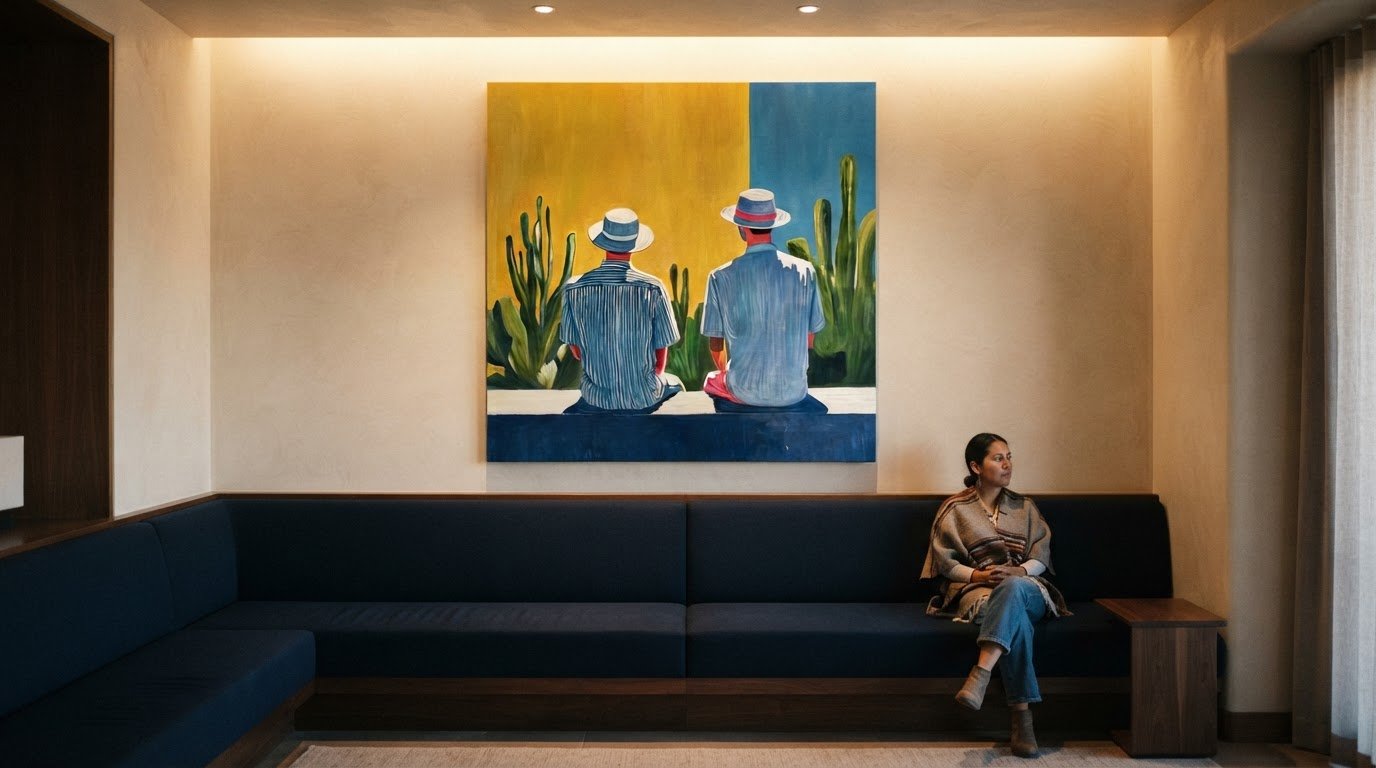
Custom art gives a hotel a visual connection to its setting. A desert lodge might draw on open landscapes, native plants, or the changing light across nearby mesas. A coastal inn could use harbor maps, tidal forms, or local fishing traditions. These references help guests understand where they are without relying on a familiar postcard image.
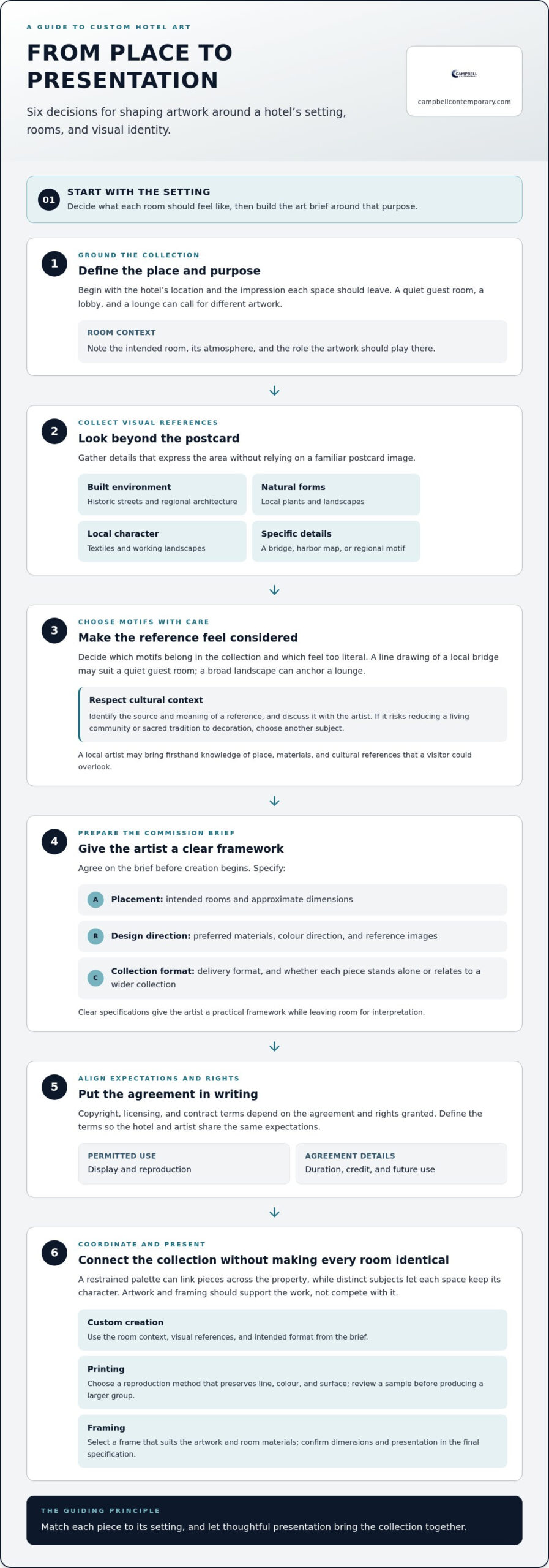
Start with the hotel’s location and the impression each room should leave. Gather visual references such as historic streets, regional architecture, plants, textiles, and working landscapes. Then decide which motifs belong in the collection and which feel too literal. A line drawing of a local bridge may suit a quiet guest room, while a broad landscape can anchor a lounge.
For commissioned work, agree on the brief before creation begins. Specify the intended rooms, approximate dimensions, preferred materials, colour direction, and delivery format. Add reference images and note whether each piece should stand alone or relate to a wider collection. Clear specifications give the artist a practical framework while leaving room for interpretation.
Copyright, licensing, and contract terms depend on the agreement and rights granted. A written commission should define permitted display, reproduction, duration, credit, and future use, so the hotel and artist share the same expectations.
Local artists can bring firsthand knowledge of place, materials, and cultural references. Their perspective may reveal details a visitor would overlook, such as a neighborhood pattern or an overlooked local craft. Working with an artist from the region can also connect the hotel’s collection to its creative community. The work should still reflect the hotel’s setting and intended atmosphere.
Cultural references call for care. A motif used without context can feel reductive or disrespectful, especially when it represents a living community or sacred tradition. Before commissioning, identify the source of each reference and discuss its meaning with the artist. If a design risks turning a complex tradition into decoration, choose another subject.
Coordinate the artwork with the hotel’s visual identity without making every room identical. A restrained palette can connect pieces across the property, while distinct subjects give each space its own character. For example, a hotel with a botanical identity might use local leaf forms in its art and echo those colours in the furnishings.
- Custom creation: Share the brief, room context, visual references, and intended format before the artist begins.
- Printing: Select a reproduction method that preserves the work’s line, colour, and surface. Review a sample before producing a larger group.
- Framing: Choose a frame that supports the artwork and suits the room’s materials. Confirm dimensions and presentation as part of the final specification.
For artwork for hotels, custom framing and printing should support the work, not compete with it. A consistent presentation can bring pieces together, while varied subjects preserve a sense of discovery from room to room.
Do the paintings come already framed?
Framing depends on the artwork and how it is supplied. A canvas print may arrive unframed or already framed, while a mural is designed for direct installation on a wall. Confirm the finished dimensions, presentation, and hanging method before planning the room layout.
For a hotel interior, the medium shapes both the visual effect and care routine. An original oil painting has a painted surface; an acrylic painting uses a different medium. Neither term alone tells you whether the work is framed. Include the piece’s format and finish in the artwork specification.
Canvas prints offer a visibly textured surface, while framed art adds a defined edge around the image. A slim frame can sit quietly against a wall; a deeper frame gives the work more visual presence. Compare the frame colour and profile with nearby finishes, such as timber furniture or metal lighting.
Acrylic and metal prints present images on smooth, firm-looking surfaces. Their clean appearance can suit a contemporary lobby or dining room. Check the maker’s care instructions before choosing cleaning products, since the surface and finish affect how each piece should be handled.
Murals can carry a large image across a wall, making them useful where a single framed work would feel too small. Their scale makes placement especially important. Review the wall dimensions, nearby furniture, and sightlines before choosing an image. In a welcome area, a mural can establish a focal point without adding multiple frames.
Intaglios are prints made from an image incised into a plate. Their fine lines and tonal detail can suit a smaller, more contemplative display. A frame can protect the paper and give the print a clear boundary, while the mat and frame colour influence how its detail reads.
For durability and easy care, start with the setting and the surface. A smooth, sealed finish may be simpler to wipe than textured material or exposed paper, but cleaning guidance depends on the specific work. In a busy corridor, consider placing art away from direct contact and ask for the recommended care method for the chosen material.
Use this sequence when selecting framed or unframed pieces:
- Choose the medium and finished dimensions for the wall.
- Decide whether a frame supports the work and the room’s interior.
- Confirm hanging requirements and care instructions before installation.
This approach keeps framing, printing, and placement aligned. For a group of rooms, a consistent frame profile can create visual order, while varied media keep each space distinct.
Hotel artwork and wall décor
Wall art shapes how guests experience a lobby, restaurant, or guest room. Begin with the room’s purpose, then consider scale, light, finishes, and how people move through the space.
Artwork for Hospitality Spaces
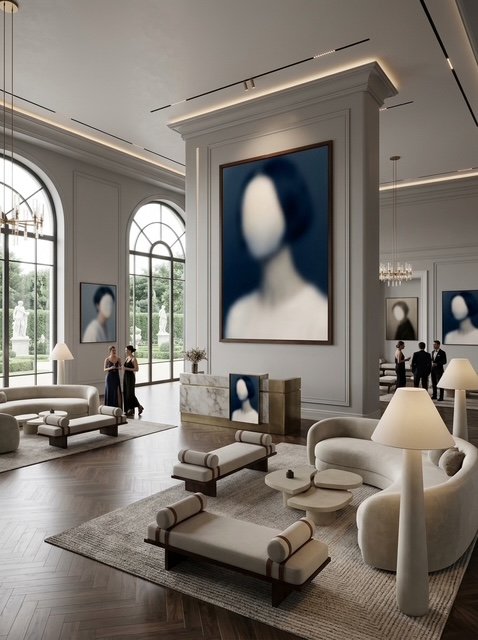
Hospitality décor includes artwork and other visual details that make a space feel considered. In a lobby, a large focal piece can orient guests as they arrive. In a corridor, a related series can make the transition between rooms feel intentional. Choose wall art that suits the room’s activity rather than repeating one image everywhere.
Consider the view from the entrance, seating, and circulation path. A piece behind a reception desk may welcome arriving guests, while art near a dining table should be comfortable to view from a seated position. Check how daylight and interior lighting affect colour and reflection. These observations help determine placement and presentation before installation.
Luxury Hotel and Restaurant Wall Décor
Luxury wall décor often relies on restraint, material harmony, and considered placement. Pair a quiet abstract work with stone or timber finishes, or use a more expressive piece as the room’s central focus. In a restaurant, art can support the dining atmosphere without competing with table settings, lighting, or conversation.
Review the wall as part of the full composition. A narrow wall beside a banquette may suit a vertical work; an open wall across from a lounge can hold a broader piece. For restaurant wall décor, also consider sightlines from each seating area. Consistent framing or colour can connect several works while allowing their subjects to differ.
Buying or Leasing Artwork
Hotels can buy artwork directly from artists, galleries, or art consultants. Leasing is generally arranged through art leasing or rental firms. The choice depends on whether the hotel wants permanent ownership, a changing display, or a collection selected for a particular property.
Before committing, define the rooms, visual direction, and display needs. Compare purchase and lease terms, including the period of use, care responsibilities, installation, and what happens when a lease ends. A hotel creating a lasting identity may prefer a cohesive collection it owns. A property refreshing its wall décor may value the flexibility of a rotating arrangement.
Whichever route you choose, document the selected works and their locations. A room-by-room schedule can identify each piece, its dimensions, and display position. This makes installation easier to coordinate and helps staff maintain a consistent presentation if artwork moves between rooms.
Art selection for different hotel spaces
Choose artwork according to room function, guest perspective, and the existing interior design. A reception area, guest room, restaurant, and corridor each call for a different visual role.
Hotel art programs vary by region and property type because local character and guest experience vary. A coastal inn might draw on harbor forms, while an urban hotel may favor architectural studies. A roadside lodge and a design-focused resort may also call for distinct scales and moods. These differences shape artwork for hotels across a property.
Start with the arrival sequence. In a lobby, place a focal work where guests naturally pause, such as behind the reception desk or across from the entrance. Consider sightlines from seating and the main route through the room. A single large piece can anchor an open space, while a grouped arrangement can guide the eye along a longer wall.
Guest rooms call for a quieter approach. Select work that reads comfortably from the bed or seating area, then compare its colours with textiles, flooring, and lighting. A restrained landscape above a headboard can support a calm mood. A small series near a writing desk can add detail without dominating the room. Choose subjects that remain comfortable to view repeatedly.
Restaurants benefit from artwork selected with the table layout and lighting in mind. A lively composition can energize a dining room, while softer colours may suit a more intimate setting. Review the piece from seated and standing positions. In a private dining room, a stronger subject can give the space a distinct character without changing the wider restaurant identity.
Corridors and transition areas deserve attention too. A sequence of related works can make a long passage feel deliberate, while varied pieces can mark changes between wings or floors. For example, a hotel could use one visual theme in the lobby, then shift to related regional subjects near guest rooms. Consistent framing or colour helps maintain a connection.
Match the selection to the property’s setting. A desert retreat might use forms drawn from its landscape; a city hotel could reference bridges, streets, or building details. These are starting points, not formulas. Choose motifs carefully, especially when local traditions or living communities inform the work, and involve artists familiar with those references.
Use a room-by-room review before final selection:
- Purpose: Note whether the space welcomes, rests, gathers, or directs guests.
- View: Check the artwork from entrances, seats, and common walking routes.
- Fit: Compare scale, colour, and subject with furnishings and lighting.
- Continuity: Decide which details connect the property and distinguish each room.
This process gives the design team a practical basis for decisions. A clear schedule can record each room, its intended mood, the selected artist, and the artwork’s position. It helps the hotel art collection feel considered while allowing each space to retain its own character.
How much does hotel artwork cost per room or project?
There is no single artwork budget that fits every hotel room or project. The total depends on the number of spaces, the work selected, and the scope of presentation and installation. A guest room with one print has different requirements from a lobby with commissioned works and a coordinated display.
Begin with a room-by-room inventory. Record each space, the available walls, the intended artwork, and whether each piece is original, commissioned, or reproduced. This defines the project scope before you compare costs. A schedule also helps distinguish shared needs, such as matching frames, from choices unique to one room.
The artwork itself is one cost driver. Original paintings, custom commissions, and printed works involve different production processes. Size and medium matter too. A larger work or a series designed for a particular wall may require different materials and preparation than a smaller piece selected from an existing collection.
Presentation adds another layer. Framing, mats, and selected finishes affect the total, as can the requirements for a mural or other wall treatment. Include installation and delivery in the project plan. Their scope depends on the works, their destinations, and how the hotel schedules access to each space.
For a per-room estimate, list the artwork and related project needs for each room. Then separate shared expenses from room-specific choices. For example, a lobby’s commissioned focal work belongs to the shared project scope, while a guest room’s selected print belongs to that room. This distinction makes it easier to compare alternatives.
Compare proposals on the same basis. Each should identify the artwork, format, framing or finish, delivery, and installation scope. If one proposal covers artwork only and another includes installation, their totals do not represent the same work. Clarify what each amount includes before comparing options.
To keep decisions orderly, build the estimate in stages:
- Define the scope: List rooms, walls, and artwork needs.
- Set the selection: Note original, custom, or printed work and its presentation.
- Separate costs: Distinguish artwork, framing, delivery, and installation.
- Review alternatives: Compare proposals using the same scope and specifications.
Changes to scale, materials, framing, or the number of commissioned works can shift a project’s total. A clear brief helps the team decide where a custom piece matters most and where a simpler format serves the room. For a considered hotel collection, explore customized hotel curation.
Campbell Contemporary: Contemporary artwork
Campbell Contemporary offers contemporary artwork for hotels seeking a considered visual direction. Its art can help shape a guest room, lobby, or shared space around the atmosphere you want to create.
For a more cohesive interior, pair selected artwork with customized cushion and pillow covers, lampshades, or candles. These details can carry a colour or visual note across a room without making every element identical. Customized room scents offer another way to shape the atmosphere.
Turn to Campbell Contemporary when you’re bringing artwork and room details together for a hotel project. Share the spaces you’re planning and the feeling you want each to convey. Contact Campbell Contemporary to discuss artwork for your hotel.
Shape the next chapter of your hotel’s visual identity
Let the collection develop with the property. As rooms are refreshed or new spaces take shape, revisit how each area feels and what guests encounter there. This keeps artwork for hotels connected to the experience the property wants to create, rather than treating each purchase as an isolated decision.
Start the next project with a clear direction. Note the spaces involved, the atmosphere you want to establish, and the details that should carry through the interior. This shared starting point helps align the artwork with the hotel’s evolving identity while leaving room for each space to feel distinct.
When you’re ready to explore that direction, Campbell Contemporary can help bring an art-led perspective to the project. Contact Campbell Contemporary about hotel art and take the next step toward a more considered guest experience.
Frequently Asked Questions
What types of artwork work best in hotels?
The best choice is artwork that suits the room’s purpose and the hotel’s atmosphere. A quiet guest room might pair well with a subtle abstract work, while a lively bar could welcome a more expressive piece. Consider original paintings, photography, prints, or mixed media, then compare how each works with the room’s furnishings and lighting before settling on a consistent direction.
How do hotels choose artwork for guest rooms and public spaces?
Hotels can start by reviewing how a room is used each day and the moments guests spend there. A guest room may call for work that feels restful during quiet hours, while a meeting room may benefit from a composed visual focus. For a practical review, place a paper mock-up where the artwork is planned, then assess it from the doorway and main seating position.
How do hotels select art that matches their brand and interior design?
Hotels can translate brand qualities into visual choices rather than relying on logos. A property that emphasizes calm might select restrained colours and open compositions; one centered on lively social spaces might prefer stronger contrast. Compare potential works with the hotel’s materials, lighting, and furnishings. A small reference board can help the design team judge whether each piece belongs in the same visual story.
What size and placement guidelines should hotels follow for artwork?
Choose dimensions in relation to the wall and nearby furnishings, not in isolation. A narrow console, broad sofa, or tall headboard each changes how a work reads. Before ordering, mark the intended outline with paper or removable tape. Review the shape from the room entrance and usual seating, and keep the composition clear of doors, switches, and other functional features.
How can hotels use artwork to improve guest experience and support local culture?
Artwork can give guests a sense of place through subjects connected to the landscape, craft, or everyday life. Select works with context, then offer a concise note about the artist or inspiration to help visitors engage. For example, a lobby display could include a short artist biography alongside the work. This adds meaning without turning the room into an exhibit.

Article by
Brett Campbell
Brett Campbell is widely considered one of the most visible and influential digital art curators in the world. Operating under his high profile handle “thebrettcampbell“ he has amassed a massive following of approximately 900,000 followers.
His prominent position in the digital space is defined by several key factors. Brett utilizes his massive Instagram footprint through high impact digital reach where he acts as a connector, discovery engine and promoter of global emerging artists. Industry recognition of his influential digital curatorial presence has been highlighted by major mainstream outlets; notably, he was the focus of a featured USA Today piece covering how “he bridges the gap in the global art world.“
Through annual spotlights as reported in Barchart, Brett regularly curates highly anticipated digital shortlists such as his annual “Artists to Watch“ selections which heavily amplify independent artists to his global audience. Campbell is featured in upcoming articles include MSN and Enterprise World to be released July 2026. While best known to the broader internet community as a massive digital curator and collector, Campbell translates his online visibility into the physical art world.
Based in New Orleans he serves as gallerist and owner of CAMPBELL CONTEMPORARY. He operates as a multidisciplinary creative himself, actively working as an artist and photographer alongside his curatorial projects.