
How to Choose Contemporary Art for Your Space
An original isn’t automatically the better choice. How to choose contemporary art depends on what you want a work to bring to your space: the distinctive presence of an original, the image and finish of a print, or a balance of both. Let your personal response, the room, and a comfortable budget guide you.
It’s natural to consider whether a piece will suit your palette and furnishings, and whether an original feels right for you. The work need not match every detail. It should feel at home in the room and continue to hold your interest over time.
This guide offers a practical way to make that choice. You’ll learn how to assess scale and placement, consider colour and style, compare originals with prints, and set a comfortable budget. Start with the space, then make room for the art itself.
Key Takeaways
- Measure the wall and nearby furniture before choosing artwork, then consider how its placement will shape the room.
- Choose between abstract, figurative, and narrative work by noticing the kind of visual presence and meaning you want.
- Let artwork echo or thoughtfully contrast with your room’s palette rather than matching every colour.
- Pay attention to the pieces you continue to respond to, and let that personal connection guide your selection.
- Compare originals, reproductions, and prints by considering what matters most to you: the individual work, the image, or the budget.
Choosing art for a space based on style, function, color, size, and placement
To decide how to choose contemporary art, begin with how you use the room and what you want the work to contribute. Set a comfortable spending limit, then compare the available pieces within it. Treat art as something to choose for its presence and meaning, not as a guaranteed investment.
-
Evaluate the Room’s Lighting and Furnishings
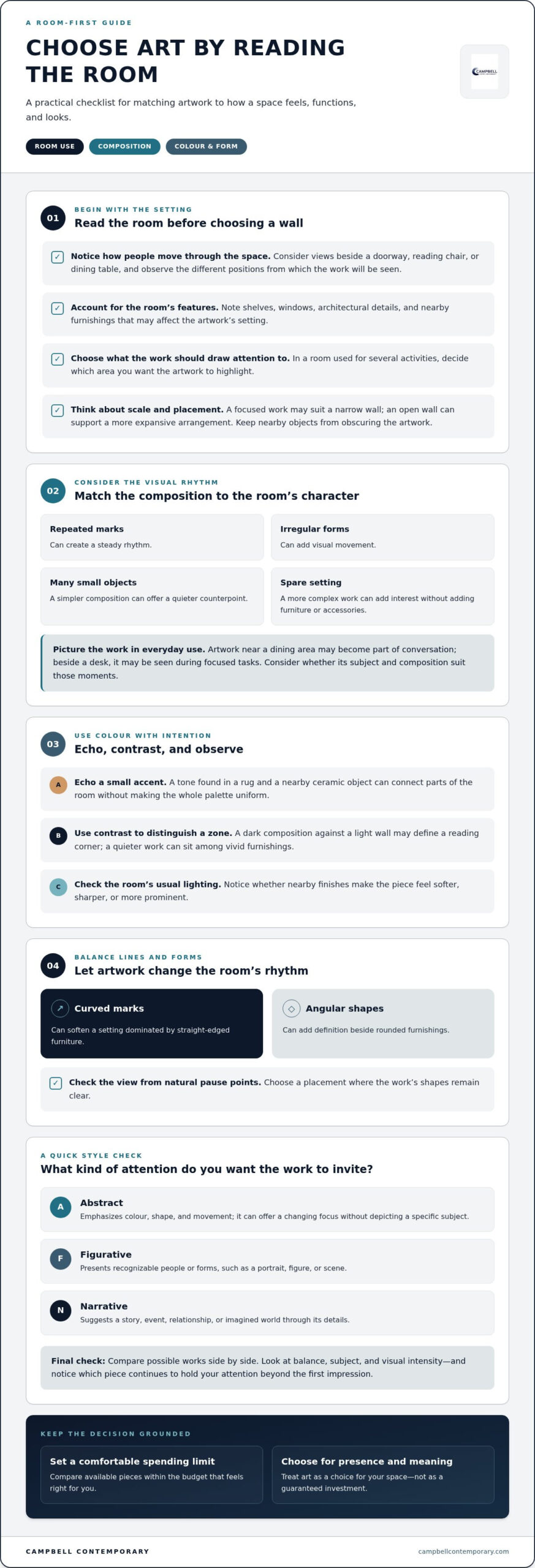
Observe how people move through the room before choosing a wall. A work beside a doorway, reading chair, or dining table will be seen from different positions. Note built-in shelves, windows, and architectural details that may affect its setting. In a room used for several activities, decide which area you want the artwork to draw attention to.
Look at the furnishings as a whole rather than treating one item as the sole reference. A low table, tall bookcase, and floor lamp each create a different visual rhythm. Decide whether the artwork should relate to one object or bring separate parts of the room into a more coherent arrangement.
-
Explore Styles, Subjects, and Composition
Compare how different compositions direct attention. Repeated marks can create a steady rhythm, while irregular forms may add visual movement. In a room with many small objects, a simpler composition can provide a quieter counterpoint. In a spare setting, a more complex work can add interest without bringing in more furniture or accessories.
Consider the work’s role in the room. Artwork near a dining area may become part of conversation, while a piece beside a desk may be seen during focused tasks. Ask whether its subject and composition suit those moments. The question of how to choose contemporary art becomes clearer when you picture the work in everyday use.
-
Coordinate or Contrast Artwork Colors
Think about colour relationships beyond matching. An artwork can connect two parts of a room by echoing a small accent found in each, such as a warm tone in a rug and a nearby ceramic object. This creates a visual link without making the whole palette uniform.
Contrast can also help distinguish zones. A dark composition against a light wall may define a reading corner, while a quieter work can sit among vivid furnishings. Consider how the piece looks in the room’s usual lighting, and notice whether nearby finishes make it feel softer, sharper, or more prominent.
-
Use Art to Add Shape and Dimension
Choose forms that respond to the room’s existing lines. Curved marks can soften a setting dominated by straight-edged furniture. Angular shapes can add definition beside rounded furnishings. This is another practical way to decide how to choose contemporary art: look for a form that changes the room’s visual rhythm with intention.
Consider the surrounding wall as part of the composition. A narrow strip between a window and cabinet may suit one focused work; an open wall can support a more expansive arrangement. Keep nearby objects from obscuring the artwork, and make sure its shapes remain clear from places where people naturally pause.
Abstract, figurative, and narrative art styles
Compare styles by the kind of attention they invite. Abstract work emphasizes colour, shape, and movement; figurative art presents recognizable people or forms; narrative pieces suggest a story. The right choice depends on what you want the artwork to bring to daily life and how the room is used.
- Begin with the way you want to look. Spend time with an abstract piece and notice how its colours, marks, and open areas work together. It may offer a changing focus without depicting a specific subject. A bold abstract work can make a clear visual statement, while a quieter composition can sit more gently among other pieces. Consider which response feels right for the room.
- Compare recognizable subjects. Figurative art gives viewers a subject to return to, such as a portrait, a figure, or a scene. Portraiture has been a foundation of artistic expression for over 5,000 years. Landscape art offers another point of recognition, presenting natural forms or a sense of place. Look at the subject’s expression, setting, and composition, then decide whether it suits the atmosphere you want.
- Notice the story or idea behind the image. Narrative art can suggest an event, relationship, or imagined world through its details. Surrealism emerged in the 1920s and challenged conventional logic, inviting viewers to question the boundaries of reality. Pop art, which emerged in the 1950s and 60s, drew on mass culture and consumerism through bold colors, graphic imagery, and familiar symbols. These styles bring distinct energy and associations.
- Compare pieces side by side. Place images of possible works together and consider their balance, subject, and visual intensity. A landscape may feel open and spacious; a portrait may draw attention to a face; an abstract composition may rely on colour and form. Don’t choose a style just because it seems to suit the room. Notice which work holds your attention beyond the first impression.
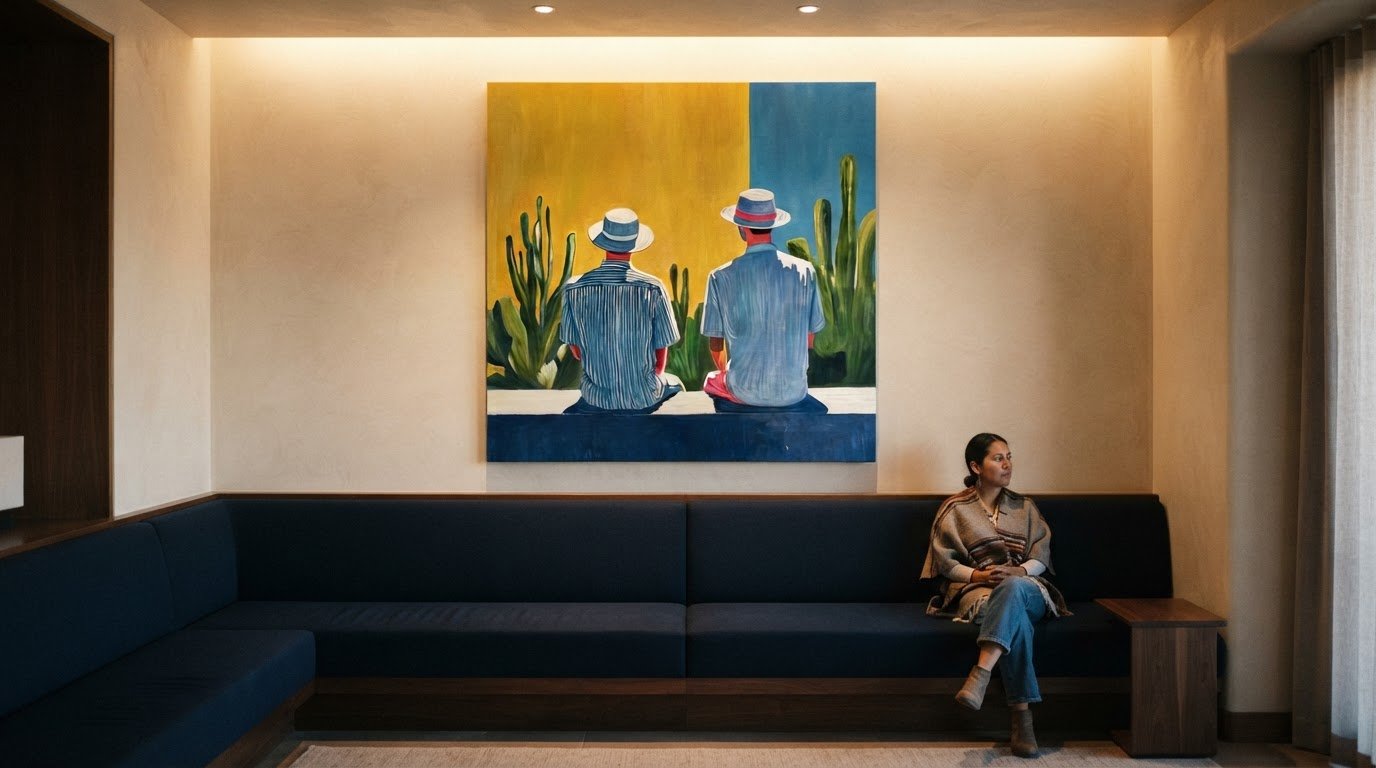
- Let the room’s purpose inform the final choice. A living room used for conversation may suit artwork that offers details to notice over time. In a quieter space, a restrained abstract image or a calm landscape may feel more fitting. For a hotel, restaurant, or retail interior, customized art curation can bring works together around the character and function of the space.
Portraiture focuses on capturing an individual’s likeness, character, beauty, status, or essence. When considering a portrait, ask which of these qualities draws your attention and whether its mood feels comfortable in the room. A direct gaze may make the work feel especially present, while a less direct pose can leave more space for reflection.
Think about how the portrait will fit the room’s everyday use. In a shared area, consider whether its expression and setting invite conversation or hold attention quietly. Compare the image with nearby furnishings and other artwork, noting how its subject and composition shape the overall feeling. The choice need not be dramatic: a portrait can offer a familiar point of focus while leaving the rest of the room in view.
Coordinating artwork with a room’s colour palette
Colour, scale, and meaning work together. Compare a painting with the room’s palette, furniture, and natural light, then consider how its story and condition suit your home.
- Choose a colour relationship. Select artwork that echoes a tone already present, such as a blue painting beside blue cushions. Or use contrast: vivid artwork can bring focus to neutral furniture, while a muted palette can soften a room with several patterns. View the piece beside the actual wall colour, since the same hue can look different against pale paint or dark wood.
- Test the artwork’s scale. Use painter’s tape to mark the work’s outer dimensions on the wall, then leave the outline in place for a day or two. View it from the doorway and from the furniture where you’ll sit. This makes it easier to judge the painting’s relationship to nearby shelves, lamps, and furniture before buying.
- Consider the story and artist. Read the title and the artist’s description, then note what the work means to you. A landscape may recall a place, while an abstract composition can prompt a response through colour and form. Learning about the artist can deepen that connection, but shouldn’t replace your own attention to the image.
- Assess quality and condition. Look closely at the surface, edges, framing, and visible marks. Consider whether the materials and technique suit the work’s appearance, and compare the piece with its description. For a print, examine image clarity and the paper or other visible surface; for an original, look for details that reflect how it was made.
- Set a budget by comparing like with like. There is no universal minimum budget for contemporary art, and typical prices don’t fall into one reliable range for emerging, mid-career, and established artists. Cost depends on factors such as the artist, medium, dimensions, and whether the work is an original or print. Compare works with similar attributes and decide what you’re comfortable spending.
- Ask practical questions before buying. Confirm the artist, title, technique, dimensions, originality, signature, and any certificate or invoice. Ask about the total price, delivery, insurance, and return conditions; also request care guidance suited to the artwork’s materials. These details help you understand the work and what to expect after purchase.
Assessing personal taste and emotional response
Your personal response is a useful guide when several works suit an interior. Use these steps to notice what holds your attention beyond the first impression.
- Notice your first response. Spend time with a painting and observe what draws your eye. It might be a line, a face, or an unexpected area of colour. Name the response plainly: calm, curiosity, recognition, or tension. That first reaction can reveal what makes the piece feel present to you, before interior design considerations take over.
- Return to the same work. Look again after stepping away, then notice whether your attention shifts. An abstract piece might first appeal through its colour, then hold your interest through its changing forms. A portrait may feel familiar at first, but its expression may keep inviting a closer look. Returning to a work helps distinguish lasting interest from passing attraction.
- Connect the work to lived experience. Consider whether a subject, place, or visual detail recalls something meaningful. A landscape could bring to mind a journey, while a simple shape might connect with a remembered object. The connection need not be obvious to visitors. Its value lies in making the artwork feel personally relevant in your everyday surroundings.
- Imagine the piece in daily life. Picture seeing it in an ordinary moment, such as entering the room or sitting down to read. In a minimal interior, a single work may become the focal point. In a room already filled with objects, a quieter piece may feel more natural. Consider which presence you want to live with, not only which image looks striking on its own.
- Give the response time to settle. If you’re uncertain, live with the room for a few weeks before committing to artwork. Notice which subjects or forms you continue to think about and which lose their appeal. This pause can clarify whether the choice reflects your taste or simply follows a current interior design trend. Note the specific details that remain compelling.
- Trust a considered response over a rule. Ask what you would miss if the work were removed. If a particular image brings pleasure, memory, or thought each time you see it, that response matters. The artwork doesn’t need to explain itself or match a fixed idea of good taste. Choose a piece whose presence feels right for the room and the life lived there.
Choosing between original art, reproductions, and prints
Choose by deciding what matters most: the individual work, a particular image, or how it complements your room. A gallery presents selected works in person, an art fair brings together exhibitors, and an online marketplace lets you browse and compare listings remotely.
- Decide what you want to own. An original is the individual artwork itself, with its own marks, materials, and visual presence. A reproduction recreates an existing image, while “print” can describe a format rather than a single level of originality. Check the description carefully: a print may reproduce another work or be an artwork created as a print.
- Compare the experience of each format. An original may offer surface details and texture that shape its atmosphere in a room. A reproduction can bring a familiar image into your interior, while a print may suit a wall where you want a particular visual effect. Consider how much you want the piece’s physical qualities to shape your experience.
- Match the choice to your priorities. If you value the character of a specific work, focus on an original. If the image matters most, a reproduction may suit your preference. Prints offer another way to choose by image, scale, and presentation. Compare the options by medium, dimensions, and role in the room, rather than treating one format as automatically superior.
- Assess the place where you’ll buy. A gallery offers a focused setting for viewing selected artwork. An art fair gathers multiple exhibitors in one venue, so you can encounter varied work during one visit. An online marketplace supports remote browsing, with each listing serving as your main view of a piece. In every setting, compare descriptions and images with the work’s intended place.
- Consider budget without assuming future value. There is no universal minimum budget for buying contemporary art. Your spending decision can reflect the artist, medium, dimensions, and whether you prefer an original or reproduction. An artist’s market standing doesn’t guarantee an artwork’s future value, so choose primarily for the work’s visual presence and meaning to you.
- Make the final comparison in context. Consider how each option will complement the room’s colors, furnishings, and existing pieces. If a print offers the image you love, its format may be the more fitting choice. If the original’s surface and individual character matter, those qualities may justify choosing the original. Explore contemporary artwork as you consider which kind of work belongs in your space.
Campbell Contemporary: Contemporary artwork
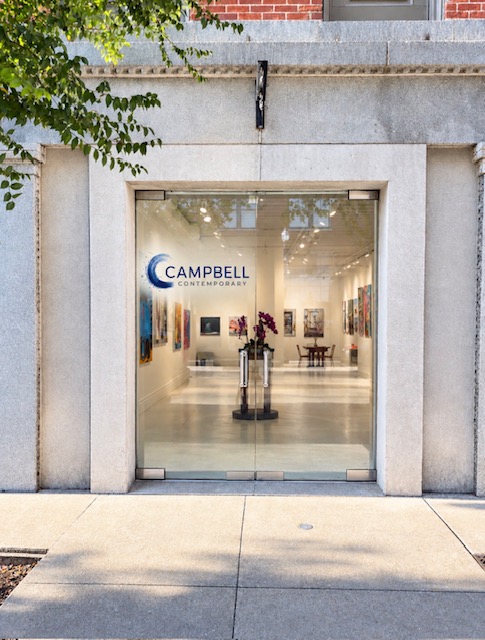
Campbell Contemporary offers contemporary artwork for those ready to bring a considered piece into their space. Explore its collection after reflecting on your room’s character, preferred style, and whether an original or print suits your priorities. You can also consider customized cushion and pillow covers, lampshades, candles, and room scents to create a cohesive interior.
For hotels, restaurants, retail spaces, and expansive estates, Campbell Contemporary provides customized art curation that considers artworks in relation to the setting. For your home, begin with the piece that holds your attention and the atmosphere you want to create. Contact Campbell Contemporary to explore contemporary artwork for your space.
Let your collection take shape over time
The first artwork need not settle every decision about a room. It can begin a visual conversation that develops as your home changes. Leave space for future discoveries, and let later additions reflect how you actually use the interior. A considered collection can grow gradually, without requiring every piece to share one style or story.
Think of how to choose contemporary art as an ongoing practice of attention. Notice what continues to interest you, what you return to, and how your surroundings shift over time. This perspective leaves room for unexpected connections instead of treating a finished room as a fixed composition.
When you’re ready to take the next step, contact Campbell Contemporary to discuss your art. Let the conversation begin with the work and the space you have in mind.
Frequently Asked Questions
Why buy contemporary art?
Contemporary art can bring an artist’s perspective into your home and give everyday spaces a point of reflection. A work may connect with a personal memory, raise a question, or simply reward close attention. Buying art can also support an artist’s ongoing practice. Consider what kind of relationship you want: a visual presence you enjoy daily, a subject that prompts conversation, or a meaningful connection to an artist’s work.
What counts as contemporary art?
Contemporary art generally describes work made by artists of the present era. It isn’t one style or medium. A painting, photograph, sculpture, or mixed-media work may all be contemporary, whether abstract or representational. The term describes a work’s relationship to its time, not a particular look. Two contemporary pieces, for example, might use entirely different materials and address different subjects while reflecting their artists’ current perspectives.
How can I research an artist’s reputation and exhibition history?
Start with the artist’s biography and exhibition record, then compare details across the artist’s own materials, gallery profiles, and exhibition pages from museums or other institutions. Note the venues, dates, and whether the listed work aligns with the artist’s practice. Reviews and interviews can add context, but distinguish commentary from verifiable exhibition information. A consistent record gives you a clearer picture of the artist’s work and public presence.
How can I verify authenticity, provenance, and certificates of authenticity?
Ask for documentation that connects the specific artwork to its artist and ownership history. Provenance is the record of a work’s ownership; compare its dates and names with the seller’s account. A certificate of authenticity should identify the work clearly and name its issuer. For a numbered print, compare the edition information across the artwork and documents. Keep the invoice and related records together after purchase.
What are typical prices for contemporary art by emerging, mid-career, and established artists?
Prices for mid-career and established artists have no reliable range; cost depends on the artist, medium, dimensions, and whether the work is an original or print.

Article by
Brett Campbell
Brett Campbell is widely considered one of the most visible and influential digital art curators in the world. Operating under his high profile handle “thebrettcampbell“ he has amassed a massive following of approximately 900,000 followers.
His prominent position in the digital space is defined by several key factors. Brett utilizes his massive Instagram footprint through high impact digital reach where he acts as a connector, discovery engine and promoter of global emerging artists. Industry recognition of his influential digital curatorial presence has been highlighted by major mainstream outlets; notably, he was the focus of a featured USA Today piece covering how “he bridges the gap in the global art world.“
Through annual spotlights as reported in Barchart, Brett regularly curates highly anticipated digital shortlists such as his annual “Artists to Watch“ selections which heavily amplify independent artists to his global audience. Campbell is featured in upcoming articles include MSN and Enterprise World to be released July 2026. While best known to the broader internet community as a massive digital curator and collector, Campbell translates his online visibility into the physical art world.
Based in New Orleans he serves as gallerist and owner of CAMPBELL CONTEMPORARY. He operates as a multidisciplinary creative himself, actively working as an artist and photographer alongside his curatorial projects.